Key takeaways
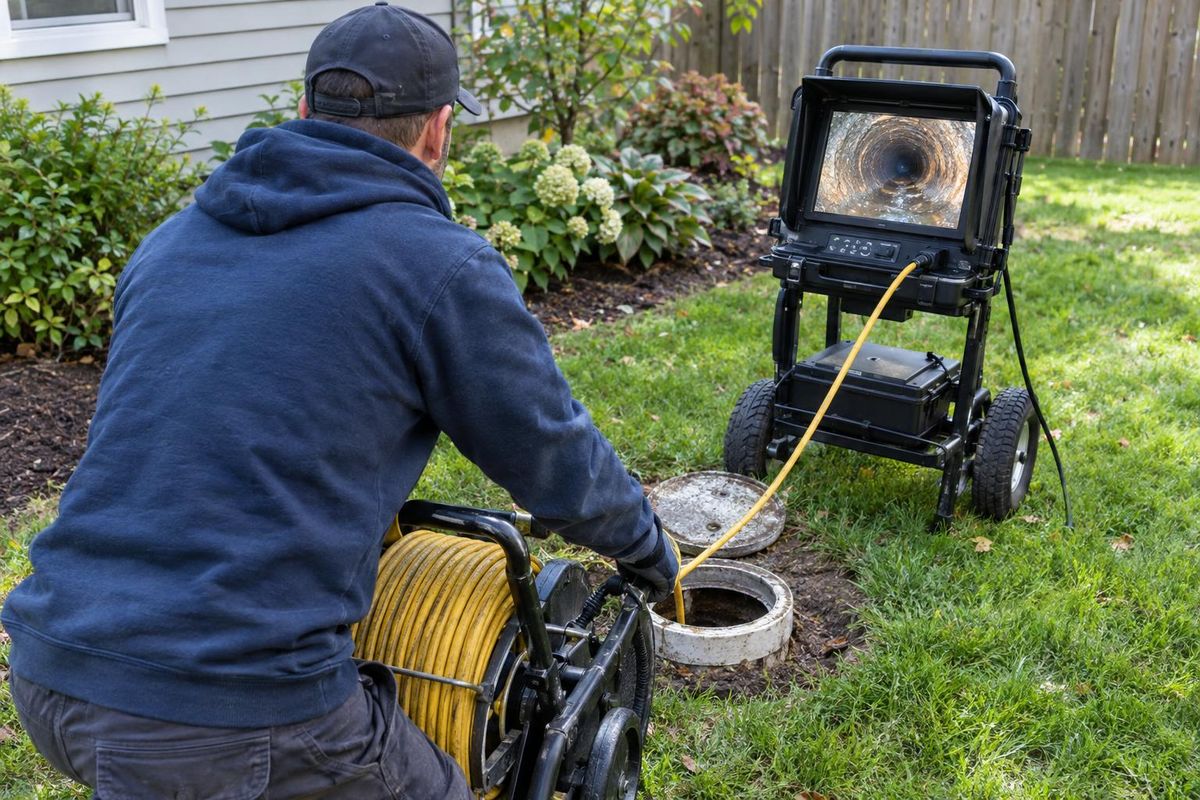
- A camera on a flexible cable records the inside of the pipe.
- It identifies material, cracks, roots, bellies and collapses.
- A locator marks problems on the surface.
- Keep the video and the report.
How it works
A technician feeds a small waterproof camera through a cleanout. A monitor shows the pipe as the camera advances, and the run is recorded. A transmitter in the camera head lets a locator find its position and depth from above.
Most inspections take under an hour.
What it reveals
Pipe material, joints, cracks, offsets, roots, scale, grease, sags and collapses are visible. You can see standing water in a belly and the place where a pipe breaks.
It also shows whether a past repair held.
How to use the results
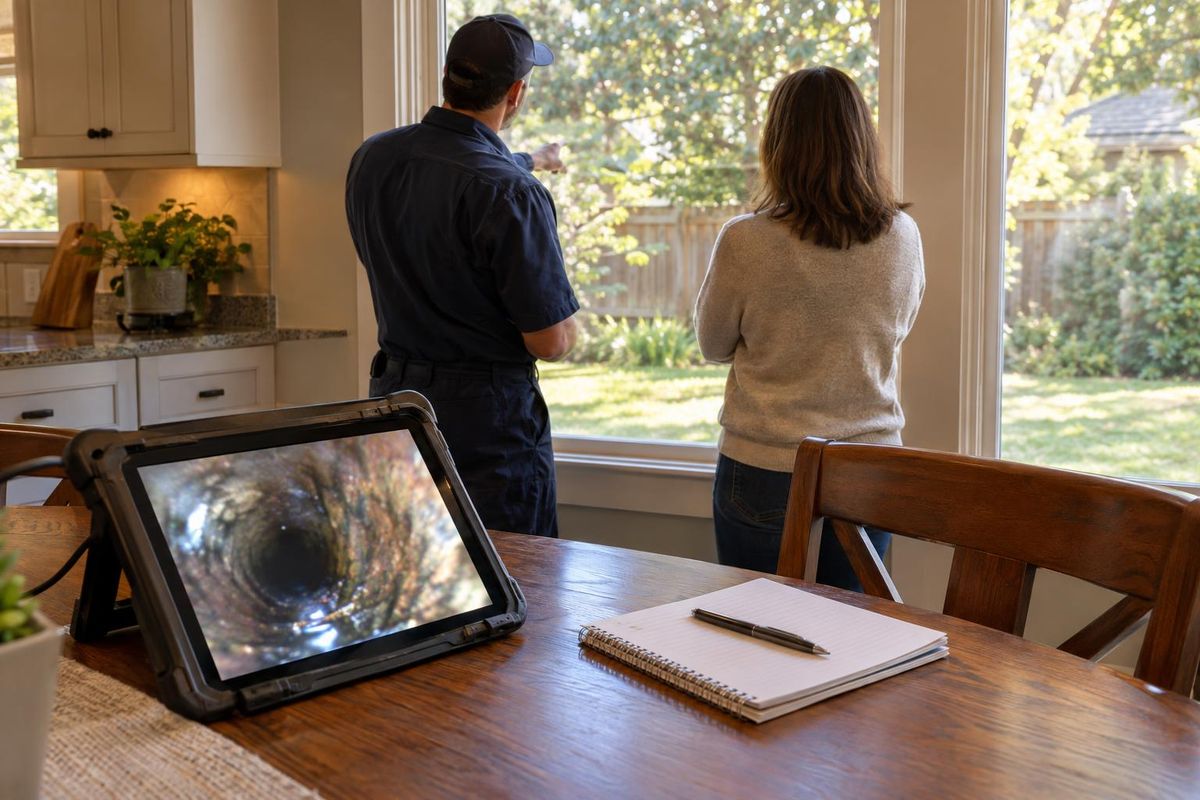
The footage turns a guess into a plan. It also lets you compare quotes fairly and shows buyers and sellers what is under the lawn.
Ask for the video and a short written summary.
Limits to know
A camera cannot pass a fully collapsed section, and very small or very sharply bent pipes can limit access. In those cases a locator and other tools fill in.
A good inspector tells you what the camera could not see.
Quick answers
Do I need a cleanout?
It helps a lot. Without one, access may be through a toilet or a vent, which is slower and less reliable.
How often should I scope my line?
When buying a home, after repeated clogs and as part of maintenance on older lines.