Key takeaways
- Clay pipe fails at its many joints and cracks.
- Cast iron rusts and scales from the inside.
- Orangeburg softens and collapses.
- PVC and similar plastics are durable but can be damaged or poorly installed.
Clay
Vitrified clay pipe is hard and long-lived, but it comes in short sections with many joints. Roots enter at joints, and soil movement cracks the pipe.
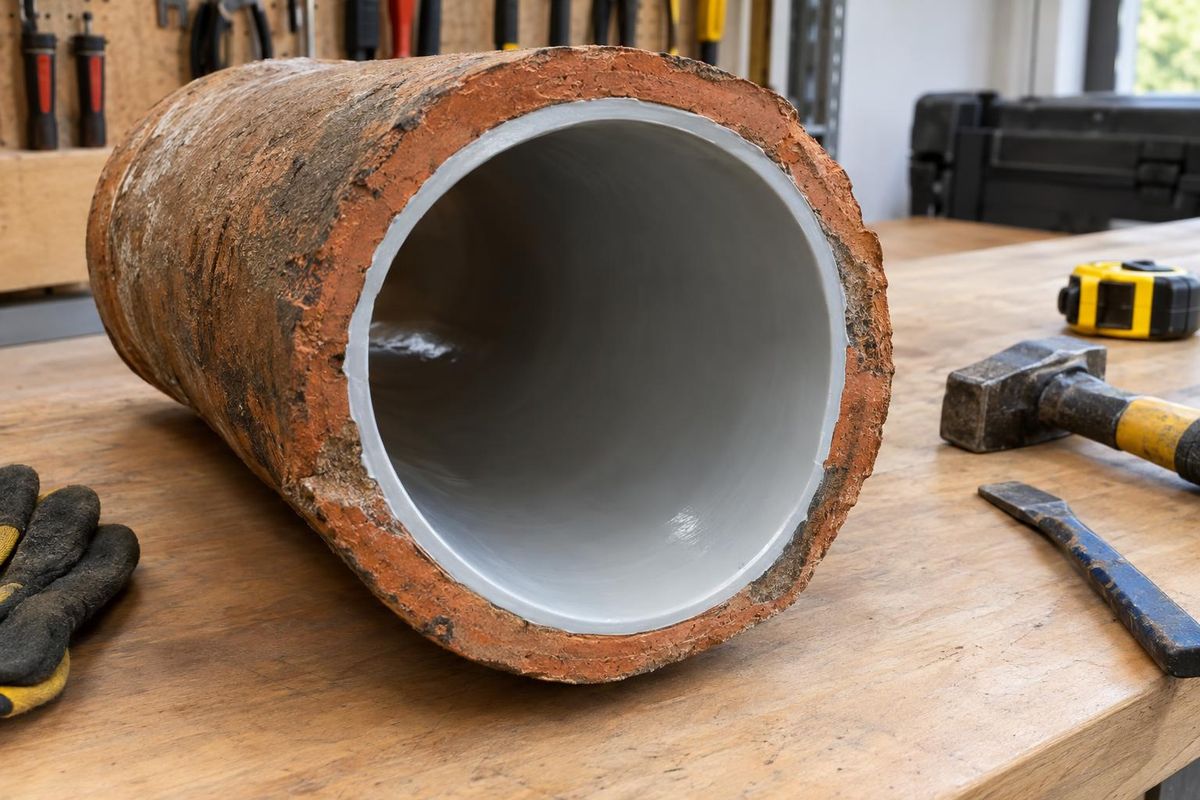
Lining and spot repair work well when the pipe is aligned.
Cast iron
Cast iron was common for building drains and many older sewers. It corrodes, forms rough scale and eventually cracks or develops holes.
Lining is often a good option, with replacement for badly failed sections.
Orangeburg
Orangeburg is a fiber and pitch pipe used in the mid-1900s. It softens, deforms and collapses over time.
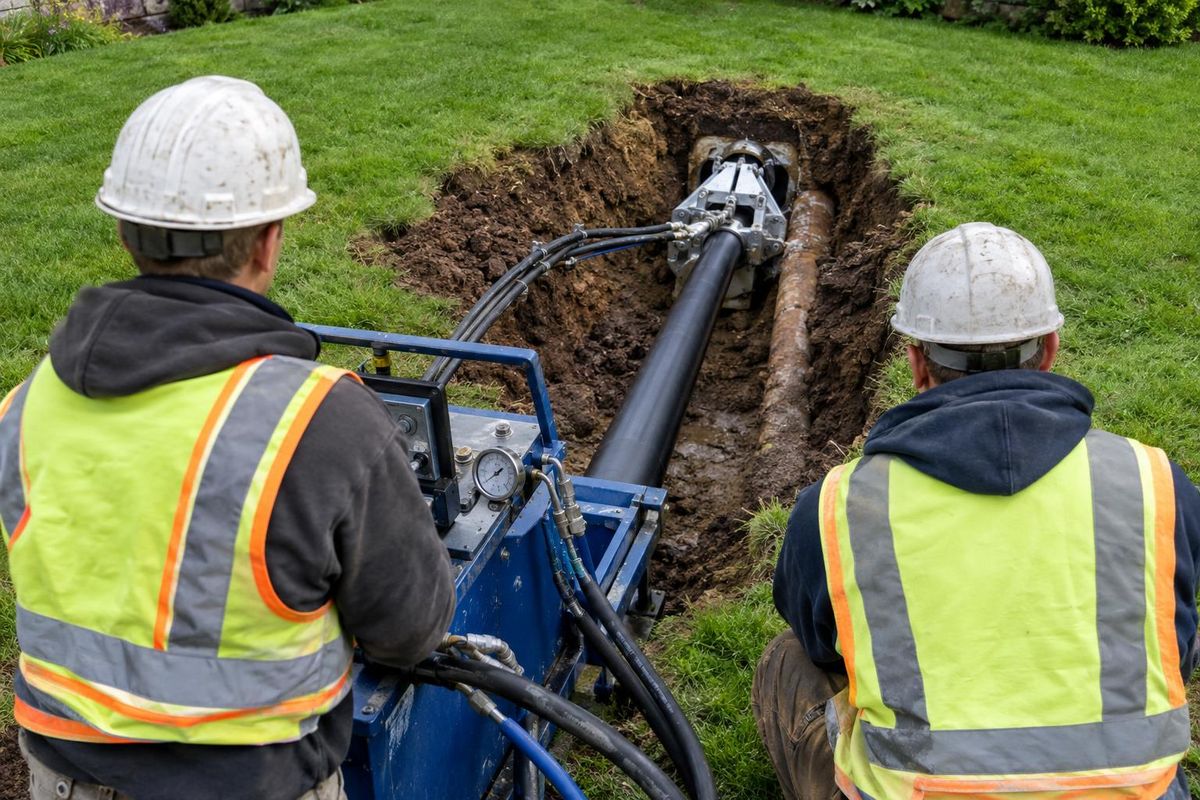
Replacement, often by pipe bursting, is usually the better choice than lining.
PVC and other plastics
Modern plastic pipe resists roots and corrosion, but poor installation can cause sags, and crushed or cracked sections happen.
Repairs depend on what went wrong. A camera tells us.
Quick answers
How do I know what my pipe is?
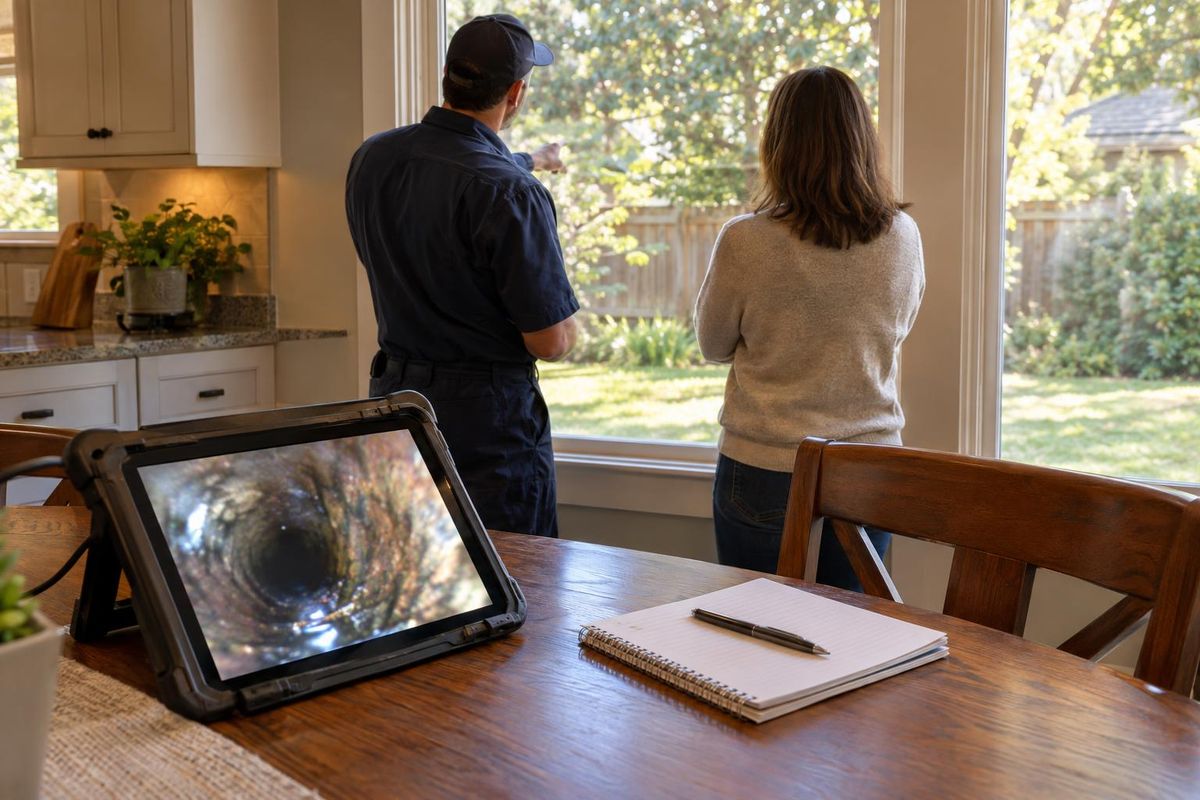
A camera inspection shows the material. The age of the house is also a clue.
Is one material always the problem?
No. Any material can fail, but each fails in its own typical way.